Mount Emei Scenic Area
Introduction
Mount Emei Scenic Area, situated on the western border of the Sichuan Basin in Southwest China's Sichuan province, is one of the four sacred Buddhist mountains of China. It is celebrated for its rich natural and cultural heritage, attracting visitors with its spectacular landscapes and significant Buddhist cultural elements. The mountain rises to a height of 3,077 meters at its highest peak, the Golden Summit, offering breathtaking panoramic views including the famous phenomena of sunrise, seas of clouds, "Buddha's halo," and the sunset glow.
World Heritage
Mount Emei, along with the Leshan Giant Buddha, was recognized as a UNESCO World Heritage Site in 1996, underlining its exceptional universal value as a site of both cultural and natural significance. The unique combination of natural landscapes, geological formations, and cultural elements on Mount Emei meets the criteria for a mixed heritage site.
As a cultural heritage site, Mount Emei is home to over 30 Buddhist temples, with ten major ones reflecting the traditional architectural styles. These temples are ingeniously constructed in harmony with the natural topography, showcasing the advanced architectural techniques of ancient China. Additionally, the site plays host to numerous historical relics, offering a glimpse into the rich cultural tapestry of Buddhism in China.
The Leshan Giant Buddha
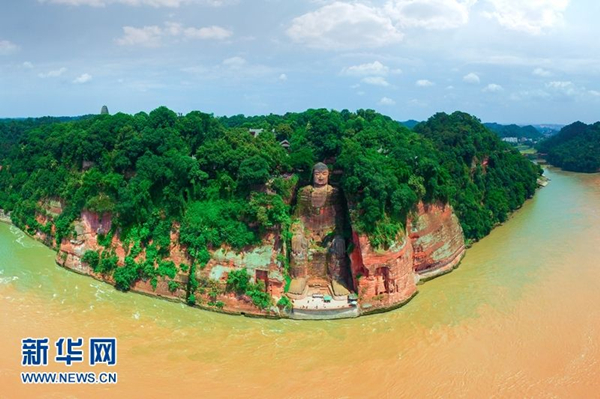
The Leshan Giant Buddha, also known as the "Lingyun Giant Buddha," is one of the most remarkable features of the Mount Emei Scenic Area. This towering statue is carved into the cliff of Mount Lingyun, standing at 71 meters high, and is considered the tallest stone Buddha statue in the world. The construction of this monumental sculpture began in 713 and was completed in 803, during the Tang Dynasty, making it a significant historical artifact.
Address: Lingyun Rd., Leshan, Sichuan province








